Following on from last week’s MadTechSketch, Ciaran O’Kane dives a little bit deeper on the “utility publishers” category that is becoming a mainstay of commerce media.
Typically a utility publisher is a service not reliant on advertising as the primary revenue source. It has no specific content focus - just utility. They also have strong data signals that buyers want to leverage for their media buys. Examples of utility publishers include: Uber, Deliveroo, Zoopla and the likes of Network Rail.
There are types of utility publishers: closed and open.
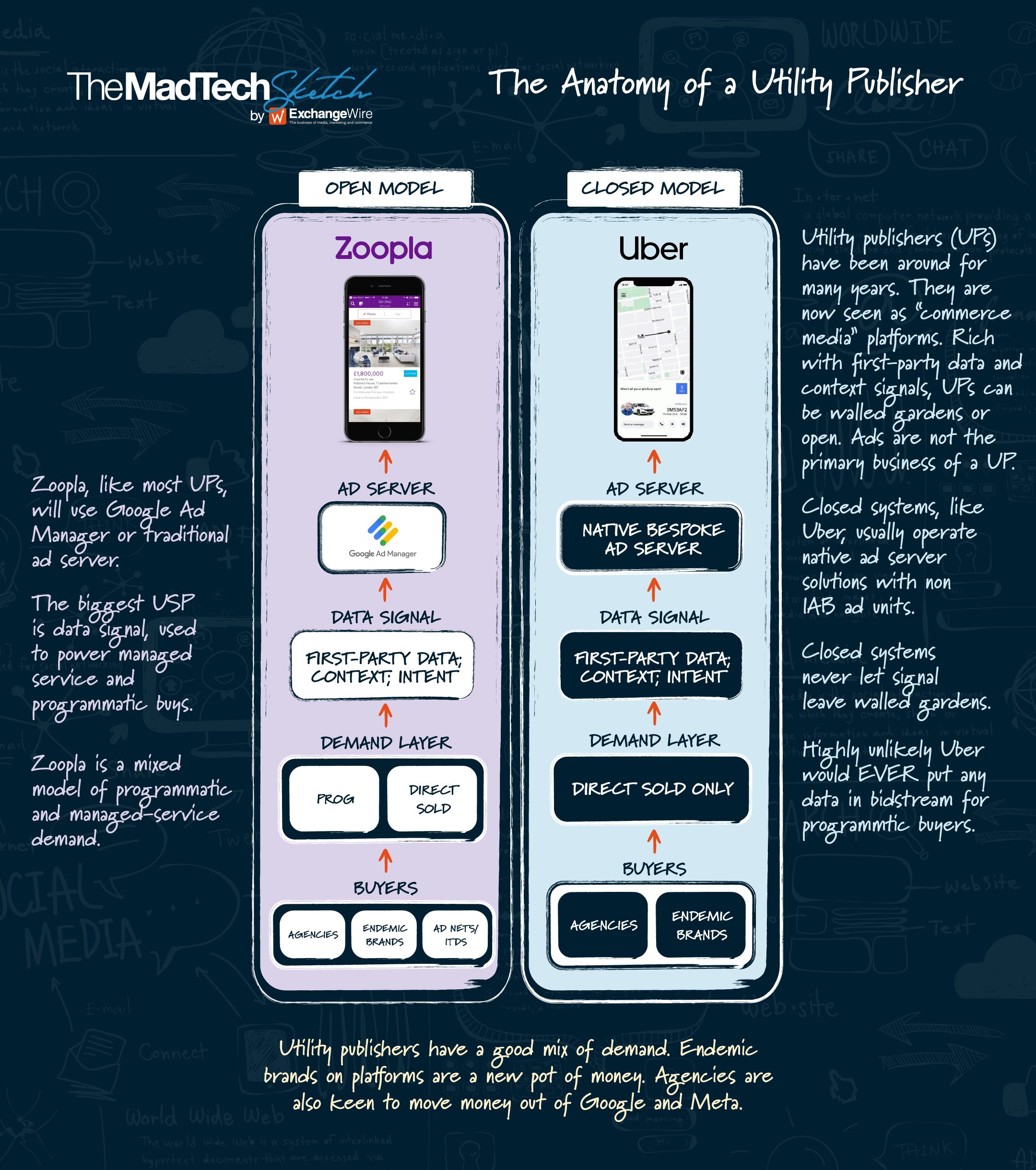
Closed utility publishers are effectively walled garden solutions where data is kept within the platform, and campaigns are delivered through a proprietary platform and managed service solution. Uber is a good example.
Open utility publishers generally have a mixed model. They will have some element of managed service but will also work with programmatic buyers, providing some sort of data signal like context or first party segments. They tend to use a traditional ad server like Google Ad Manager or the likes of Equativ. Zoopla would be a textbook example of an open utility publisher.
In the sketch this week, I outline a workflow for both open and closed.
What do you think of this solution? What are your thoughts on the rise of utility publishers and commerce media? Let us know on Twitter or LinkedIn.
LightBoxTV, the platform redefining TV campaign workflows, has partnered with Vevo, the world’s leading music…
In today’s Digest, Google agrees to a $1.4bn settlement in Texas over privacy lawsuits, UK…
A new study conducted by Picnic in partnership with media agency the7Stars has revealed that…
Adform, the most powerful and safe media buying platform built for game changers, celebrates today…
Opti Digital, a premium ad revenue platform, unveils a new brand identity that embodies its…
In today’s Digest, Ireland pushes for Big Tech to vet financial ads, Warner Bros. Discovery…